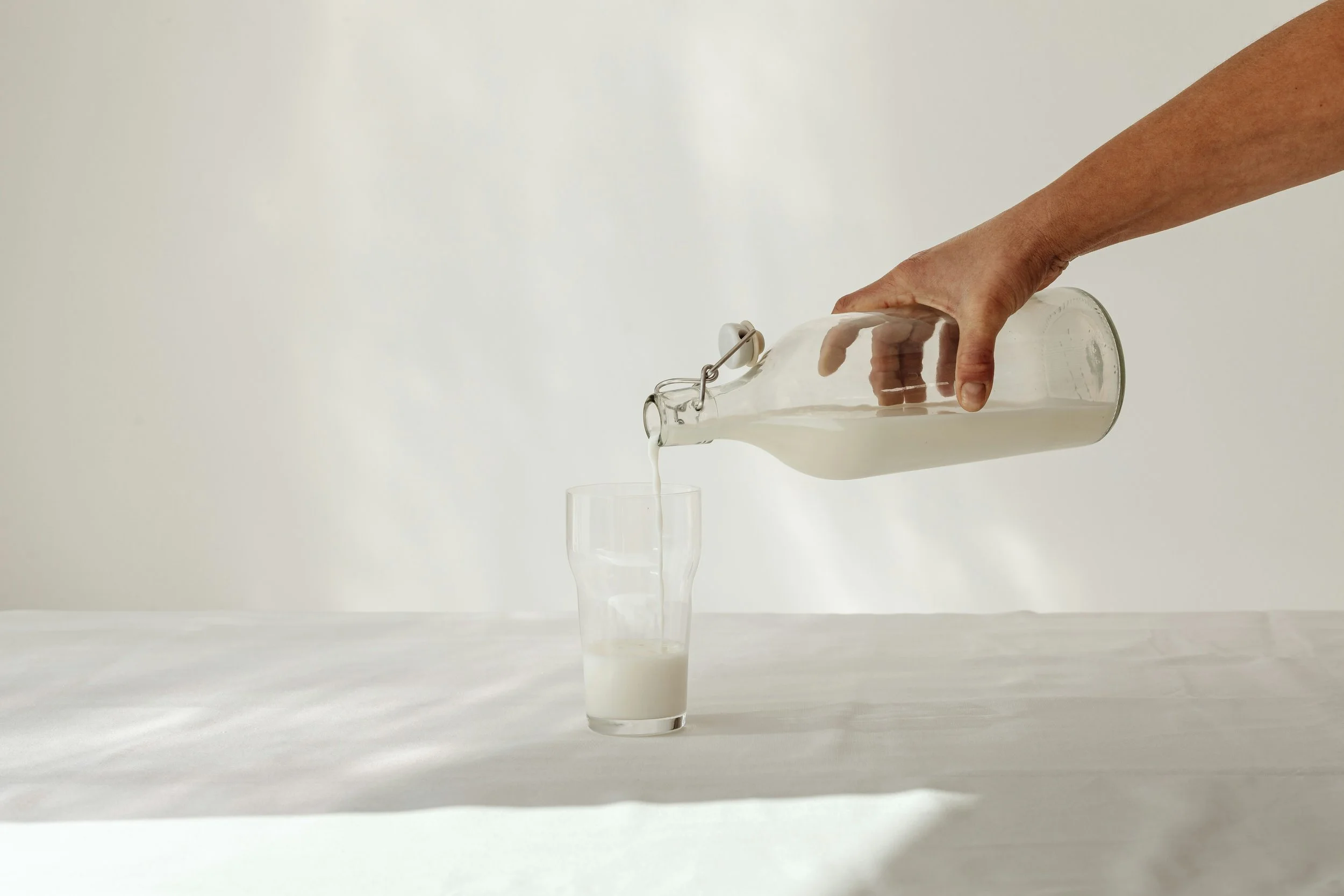
Dear Families,
(The stories below are based on real patients from our practice. Names and identifying details have been changed.)
Last spring, a mom brought in her two-year-old, Theo, who'd had loose, watery stools for almost two weeks. He was still playing and drinking, but he was waking at night with cramping, going through diapers at a startling rate, and had stopped asking for his favorite foods. The family had recently started buying raw milk from a farm an hour outside of town. Mom and Dad had been drinking it for months with no problems, and they'd read online that it was full of enzymes and "good bacteria" that would help Theo's digestion and immunity. We sent a stool test. It came back positive for more than one pathogen, including Salmonella and a disease-causing strain of E. coli.
A few months later, four-year-old Lila came in with a similar story. Her family made their own yogurt and drank raw milk daily, and she'd been dealing with on-and-off diarrhea and bellyaches for nearly three weeks. Her parents assumed it was a lingering virus from preschool. Again, the stool test showed multiple bacterial pathogens.
Neither child ended up in the hospital, and I'm grateful for that. But both had weeks of diarrhea and intermittent abdominal pain before things fully settled down, which meant missed preschool, missed work for their parents, sore diaper areas, and a lot of worry. And in both cases, the parents said the same thing: "We drink it too, and we're fine."
That's the piece I want every family to understand.
Why "We're Fine" Doesn't Apply to Your Toddler
Adults have mature immune systems, a well-established gut microbiome, and stomach acid that acts as a first line of defense. Young children have none of these fully developed. It takes fewer bacteria to make a toddler sick, and when they do get sick, they tend to get sicker. The CDC notes that children are more likely than adults to become seriously ill from the bacteria in raw milk, and the American Academy of Pediatrics' newly updated policy statement (published this month in Pediatrics) reports that nearly half of illnesses linked to raw dairy occur in people under 20, with a significant share in children under five.
The most serious concern is a complication of certain E. coli infections called hemolytic uremic syndrome (HUS), which can cause kidney failure. In one Minnesota analysis, about 1 in 5 people with E. coli O157 infections who reported drinking raw milk developed HUS. Just this fall, a multistate E. coli outbreak tied to raw-milk cheddar and jack cheeses sickened people in nine states, including several in the West. More than half were children five and younger, and three developed HUS.
"Can't You Just Give Them an Antibiotic?"
This is one of the most common questions I get, and the answer surprises people. For many of these infections, antibiotics aren't the right tool when symptoms are mild. They disrupt the gut's healthy bacteria at a time when it's already struggling, and for some infections, they can actually make things worse. With uncomplicated Salmonella, antibiotics can prolong how long a child carries and sheds the bacteria. With certain strains of E. coli, antibiotics may increase the risk of HUS. So for children like Theo and Lila, the treatment is mostly supportive: fluids, rest, gentle foods, close monitoring, and patience while the body clears the infection on its own. That can take weeks.
The Claims vs. the Evidence
Raw milk is having a moment on social media. One analysis of the top #rawmilk videos on TikTok found they had racked up more than 231 million views, many of them promoting raw milk as a superfood. Here's how the most common claims hold up:
"Pasteurization destroys the nutrients." Pasteurization heats milk briefly to kill harmful germs. It causes small drops in a few heat-sensitive vitamins (milk isn't a meaningful source of these anyway). The protein, fat, calcium, and other major nutrients are essentially unchanged. The AAP states plainly that pasteurized dairy provides the same essential nutrition without the infection risk.
"Raw milk cures lactose intolerance because it has lactase." This is one of the most widely shared claims, and it has been tested directly. A randomized, double-blind Stanford study found raw milk did not reduce lactose intolerance symptoms compared with pasteurized milk. Raw and pasteurized milk contain the same amount of lactose, and the FDA notes that raw milk has no meaningful lactase of its own.
"It's full of probiotics." Raw milk does contain bacteria, but it isn't a reliable or safe probiotic source, because there's no way to choose only the good ones. Pasteurized yogurt and kefir with live, active cultures give you beneficial bacteria without the gamble.
"It prevents asthma and allergies." This one has a real scientific thread behind it, so it deserves a fair answer. Large European studies (PARSIFAL and GABRIELA) found that children who drank farm milk had lower rates of asthma and hay fever. But these studies couldn't confirm whether the milk was raw or boiled, farm life involves many other exposures, and the researchers themselves explicitly said they could not recommend raw milk for children because of the infection risk. Researchers are working on whether the protective factors can be preserved in a safe product, but we aren't there yet.
"It's safe if it comes from a clean, grass-fed farm." Unfortunately, cleanliness and good animal husbandry reduce contamination but can't eliminate it. Bacteria are introduced during milking even under ideal conditions, and you can't see, smell, or taste whether milk is contaminated. Both grass-fed and grain-fed herds have been linked to outbreaks. Raw milk also carries an emerging risk: the H5N1 bird flu virus can reach high levels in milk from infected cows and has been found in raw milk samples from affected areas. Pasteurization inactivates it.
Milk vs. Yogurt vs. Cheese: Are All Raw Dairy Products Equally Risky?
Not exactly, though none are risk-free.
Raw milk carries the highest risk. It's a liquid that's consumed fresh, often in large amounts, and any bacteria present go straight to your child.
Raw yogurt and kefir are somewhat less hospitable to germs because fermentation makes them acidic. But acidity is not a kill step. Studies show E. coli O157 in particular is acid-tolerant and can survive yogurt and kefir fermentation and storage. Homemade raw yogurt, like Lila's, adds the variables of home equipment, temperatures, and timing.
Raw-milk cheese depends on the type. Federal rules require raw-milk cheese sold across state lines to be aged at least 60 days, and hard, aged cheeses are generally lower risk than fresh ones. But the 60-day rule is not a guarantee: FDA testing has found Salmonella, Listeria, and E. coli in raw-milk cheese aged 60 days, and this fall's outbreak involved aged cheddar and jack. Soft and fresh raw-milk cheeses (think queso fresco, brie, or camembert-style cheeses) are the riskiest. An FDA and Health Canada risk assessment estimated soft-ripened cheese made from raw milk carries a 50 to 160 times higher risk of Listeria than the same cheese made from pasteurized milk.
The Bottom Line
I understand the appeal. Many families come to raw milk out of a sincere desire to give their children the most natural, nourishing food possible, and that instinct is one I share. But with young children, the math just doesn't work out. The nutritional benefits are minimal to none, and the risks are real, sometimes serious, and fall hardest on the smallest members of the family.
If your family loves dairy, choose pasteurized milk, and look for pasteurized yogurt and kefir with live cultures for gut support. If you enjoy raw-milk cheese yourself, keep it to hard, well-aged varieties and skip it for young kids and anyone who is pregnant. And if your child develops diarrhea that lasts more than a few days, especially with blood in the stool, decreased urination, unusual paleness, or significant fatigue, please call us right away.
As always, we're happy to talk through any questions at your child's next visit.
Warmly,
Dr. Capella